
Hunyuan Image 3 Instruct for Face Swap and Clothing Change

Introduction
Most discussions around text to image models focus on generating new images from scratch. In practice, however, many real applications depend on something slightly different.
Tasks like face swapping, changing clothing, or modifying specific parts of an image are becoming increasingly common. These workflows require a model that can follow instructions precisely, rather than just producing visually appealing outputs.
Hunyuan Image 3 Instruct is particularly interesting in this context. Its instruction driven design makes it more suitable for controlled edits, especially when prompts involve multiple constraints.
This article takes a closer look at how the model can be used for face swap and clothing change scenarios, and what developers should keep in mind when integrating these capabilities.
Why Image Editing Is Harder Than It Looks
Generating an image is one thing. Editing an existing one introduces a different set of challenges.
The model needs to:
- preserve identity and structure
- modify only selected regions
- maintain visual consistency
- avoid artifacts
In many systems, these requirements conflict with each other. Changing one element often disrupts the rest of the image.
That is why instruction clarity matters.
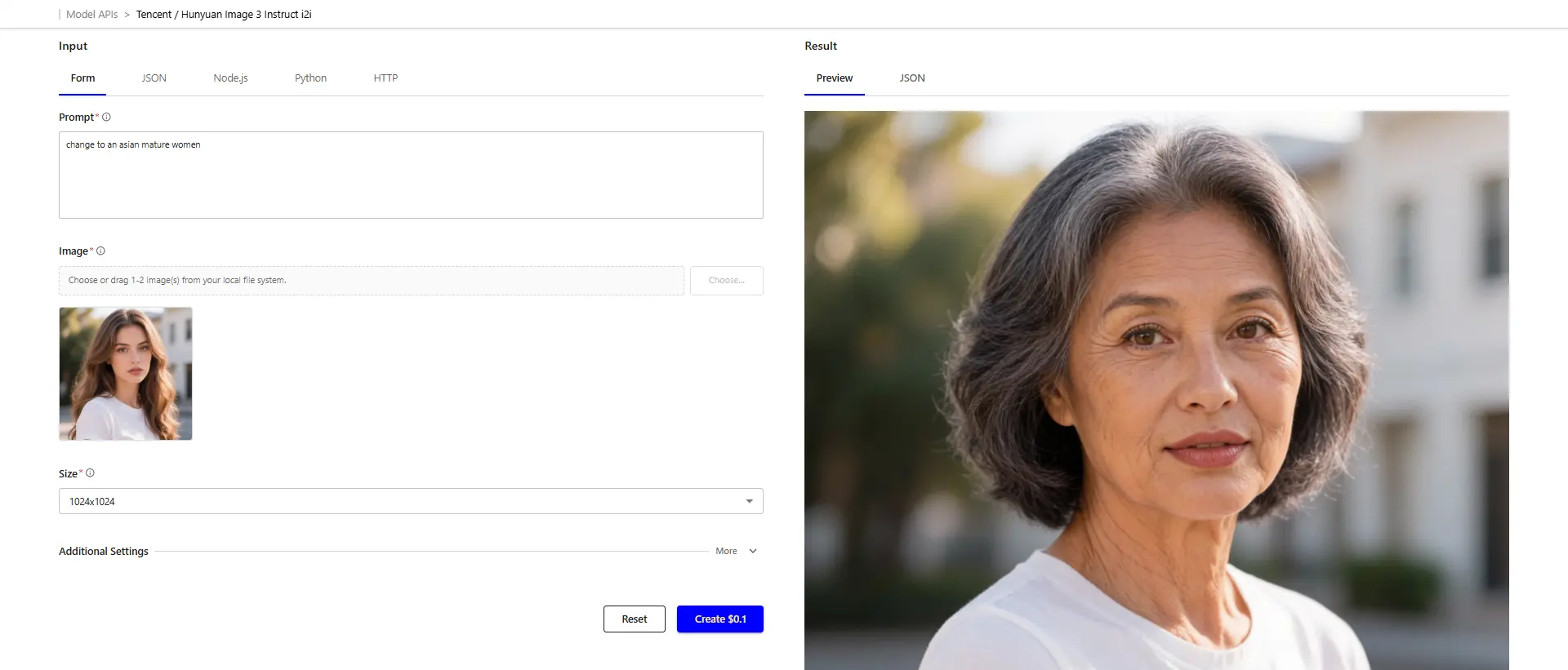
Face Swap Workflows
Face swap is one of the most requested features in AI image applications.
In a typical workflow:
- Input image is provided
- Target face description or reference is defined
- Model generates a modified image
The key challenge is maintaining realism. Poor implementations often result in:
- mismatched lighting
- distorted facial features
- unnatural blending
Hunyuan Image 3 Instruct performs relatively well in these scenarios because it keeps track of global context while applying localized changes.
Clothing Change and Outfit Editing
Clothing modification is another common use case.
Examples include:
- changing casual wear to formal attire
- generating fashion variations
- adapting outfits for different themes
This type of edit requires:
- preserving body pose
- maintaining fabric consistency
- adjusting lighting and shadows
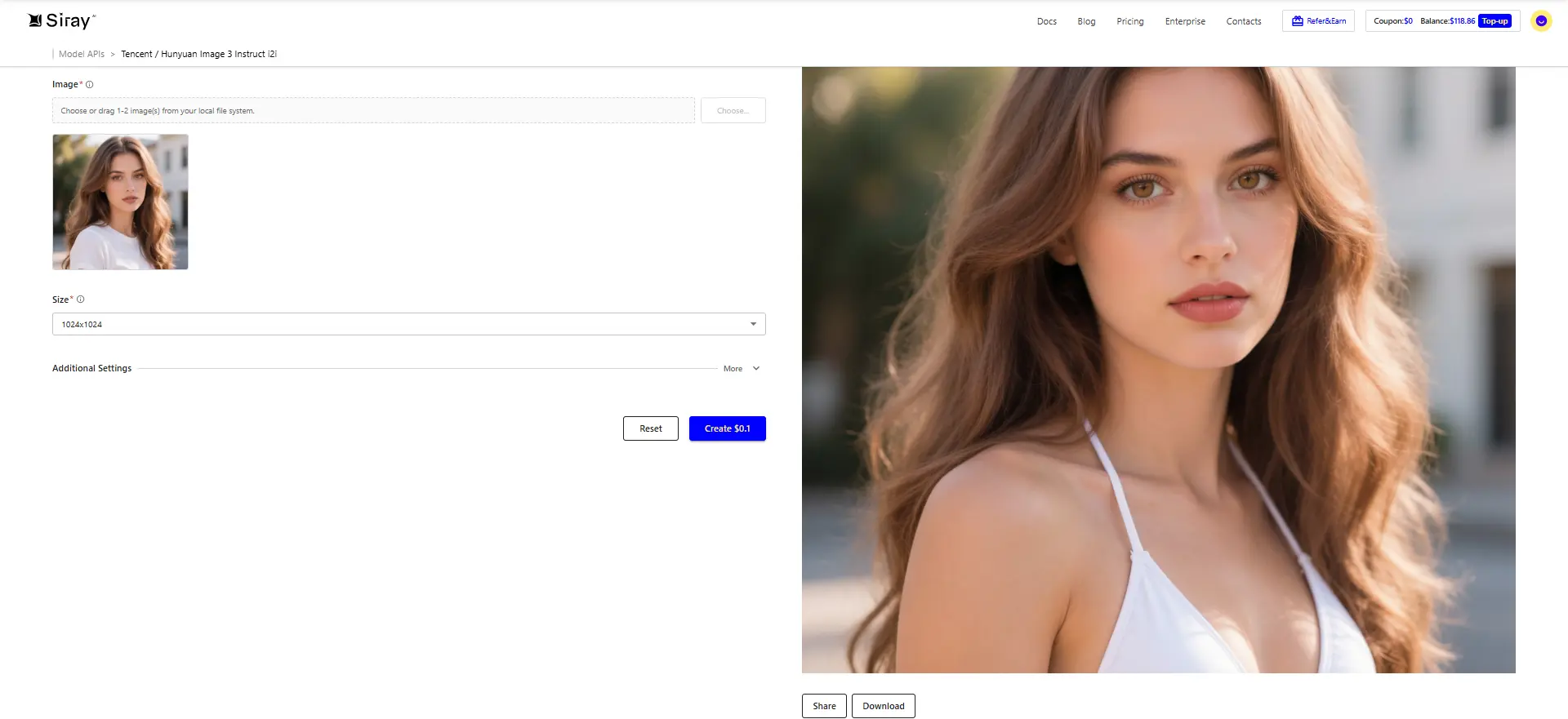
Instruction tuned models handle this better because they treat the prompt as a set of constraints rather than a loose description.
Flexible Editing and Creative Freedom
One notable aspect of Hunyuan Image 3 Instruct is its more flexible prompt handling.
Some editing tasks can be restricted or blocked in more heavily filtered systems. In contrast, this model tends to allow a broader range of transformations, including:
- stylized edits
- experimental visual concepts
- mature themed variations
For developers building creative platforms, this flexibility can be important.
At the same time, it means that content control should be handled at the application level, depending on the use case.
Summary
Hunyuan Image 3 Instruct is not just another text to image model. Its strength lies in how it handles controlled image edits.
For workflows such as:
- face swapping
- clothing changes
- targeted image modifications
instruction following becomes more important than raw generation quality.
This is where the model performs well.
Final Thoughts
As image generation continues to evolve, editing capabilities are becoming just as important as generation itself.
Models that can follow instructions precisely while allowing flexible transformations will be more useful in real applications.
Hunyuan Image 3 Instruct is a step in that direction.