The Creator’s Guide to Kling 3.0 and Kling 3.0 Omni: Features, Benchmarks, and Real-World Use Cases

The gap between "AI video that looks cool" and "AI video you can actually use in production" has always been the holy grail of generative media. For a long time, we dealt with morphing faces, physics that didn't make sense, and characters that changed clothes every three seconds.
With the release of Kling 3.0 and Kling 3.0 Omni, that gap hasn't just narrowed—it has effectively closed.
At Siray.AI, we have been testing these models extensively to ensure they meet the demands of our enterprise and SMB clients. The verdict? This isn't just an incremental update. It is a fundamental shift in how we approach motion and multimodal synthesis.
In this deep dive, we will break down the architecture, look at the benchmark data, and show you exactly how to fit these powerful new tools into your workflow using the Siray.AI unified API.
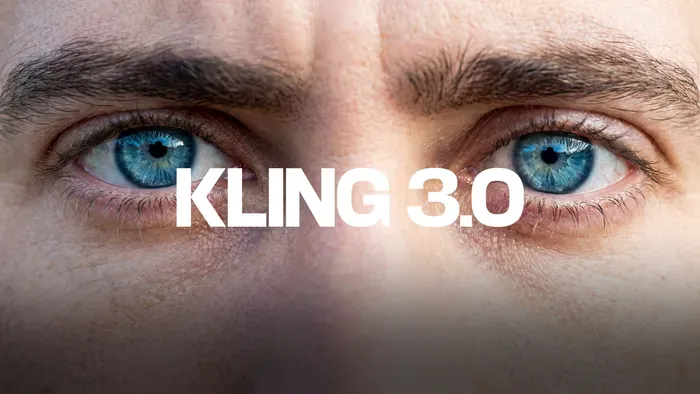
Kling 3.0: Mastering Physics and Motion
When the original Kling model launched, it made waves for its ability to generate long-duration clips that maintained coherence. Kling 3.0 takes this foundation and rebuilds the engine.
The "Simulated World" Approach
According to the official user guide, Kling 3.0 has significantly upgraded its understanding of physical laws. In previous iterations of AI video, complex interactions—like a person drinking water or a car turning a corner—often resulted in "glitching" where objects would merge.
Kling 3.0 handles object permanence with frightening accuracy. If a character walks behind a tree, the model remembers exactly what they look like when they emerge on the other side. This "memory" is crucial for storytelling.
Key Technical Upgrades:
- Resolution & Framerate: Native support for 1080p output at higher frame rates, reducing the need for external upscalers.
- Prompt Adherence: The model now separates complex instructions better. If you ask for "a red car moving left" and "blue smoke rising right," it no longer blends the colors.
- Motion Control: Enhanced support for camera movements (pan, tilt, zoom) that feel cinematic rather than robotic.
Kling 3.0 Omni: The Multimodal Powerhouse
While Kling 3.0 focuses on video, Kling 3.0 Omni is the new heavyweight for image and multimodal understanding.
The "Omni" designation suggests versatility. This model is designed to handle text-to-image with a level of composition and prompt following that rivals—and in some cases surpasses—specialized image models like Flux.
[Insert Image: An example of a complex prompt generated by Kling 3.0 Omni, highlighting text rendering on a sign or detailed texture work]
Why "Omni" Matters for Video
You might ask, "Why do I care about an image model if I make video?" The answer is Image-to-Video (I2V) pipelines.
The best AI video workflows often start with a perfect reference image. Kling 3.0 Omni allows you to generate that initial asset with precise control over lighting and composition. Because Omni and Kling 3.0 share the same underlying training data DNA, the transition from an Omni-generated image to a Kling 3.0 video is seamless. The style transfer is nearly 1:1.
Benchmarks: How Does It Compare?
We don't just rely on the "eye test." We look at the data. Platforms like Artificial Analysis and other benchmarking sites have begun stress-testing the latest wave of video models.
While specific ELO scores fluctuate weekly, early metrics for Kling 3.0 indicate a massive surge in two specific areas:
- Temporal Consistency Score: In tests involving 5-second clips of human faces, Kling 3.0 shows significantly less degradation of facial features compared to competitors like Luma or older Runway versions.
- Prompt Following Accuracy: When given prompts with 5+ distinct elements, Kling 3.0 Omni retrieves and renders roughly 15-20% more elements accurately than the previous generation.
In terms of speed, Siray.AI benchmarks show that despite the higher fidelity, inference times remain competitive. By optimizing the routing on our end, we see generation times that make iterative workflows feasible for production teams, not just hobbyists.
Real-World Use Cases
So, how do you actually use this? Here are three workflows we are seeing from Siray.AI users:
1. The E-Commerce Product Showcase
The Problem: Filming professional product b-roll is expensive. The Kling Solution: Use Kling 3.0 Omni to generate a photorealistic image of a product (e.g., a perfume bottle) in a specific environment (e.g., a forest stream). Then, feed that image into Kling 3.0 with a "camera orbit" instruction. Result: A 10-second 1080p clip of the product with realistic water reflections and lighting changes, generated for cents rather than thousands of dollars.
2. Narrative Storyboarding & Animatics
The Problem: Directors need to visualize scenes before filming, but sketching is slow. The Kling Solution: Filmmakers are using the model to generate fully animated scenes. With the improved character consistency, they can generate multiple shots of the same "actor" to test lighting setups and blocking. Result: A fully animated pre-visualization of a film scene in under an hour.
3. Social Media Content at Scale
The Problem: Accounts need daily video content to grow, but stock footage is generic. The Kling Solution: Automating the pipeline via n8n connected to the Siray.AI API. You can pull trending news headlines and automatically generate relevant, high-quality background visuals using Kling 3.0.
Integrating Kling 3.0 into Your Workflow
The power of Kling 3.0 is undeniable, but access can be a bottleneck. Official platforms often have waiting lists, complex tier systems, or region locks.
This is where Siray.AI steps in as your infrastructure partner.
We have integrated Kling 3.0 and Omni directly into our unified API gateway. This means:
- One Key: You don't need a separate subscription for Kling, Flux, and Vidu. One Siray key accesses them all.
- No Hardware Required: You don't need a massive H100 cluster. We handle the compute.
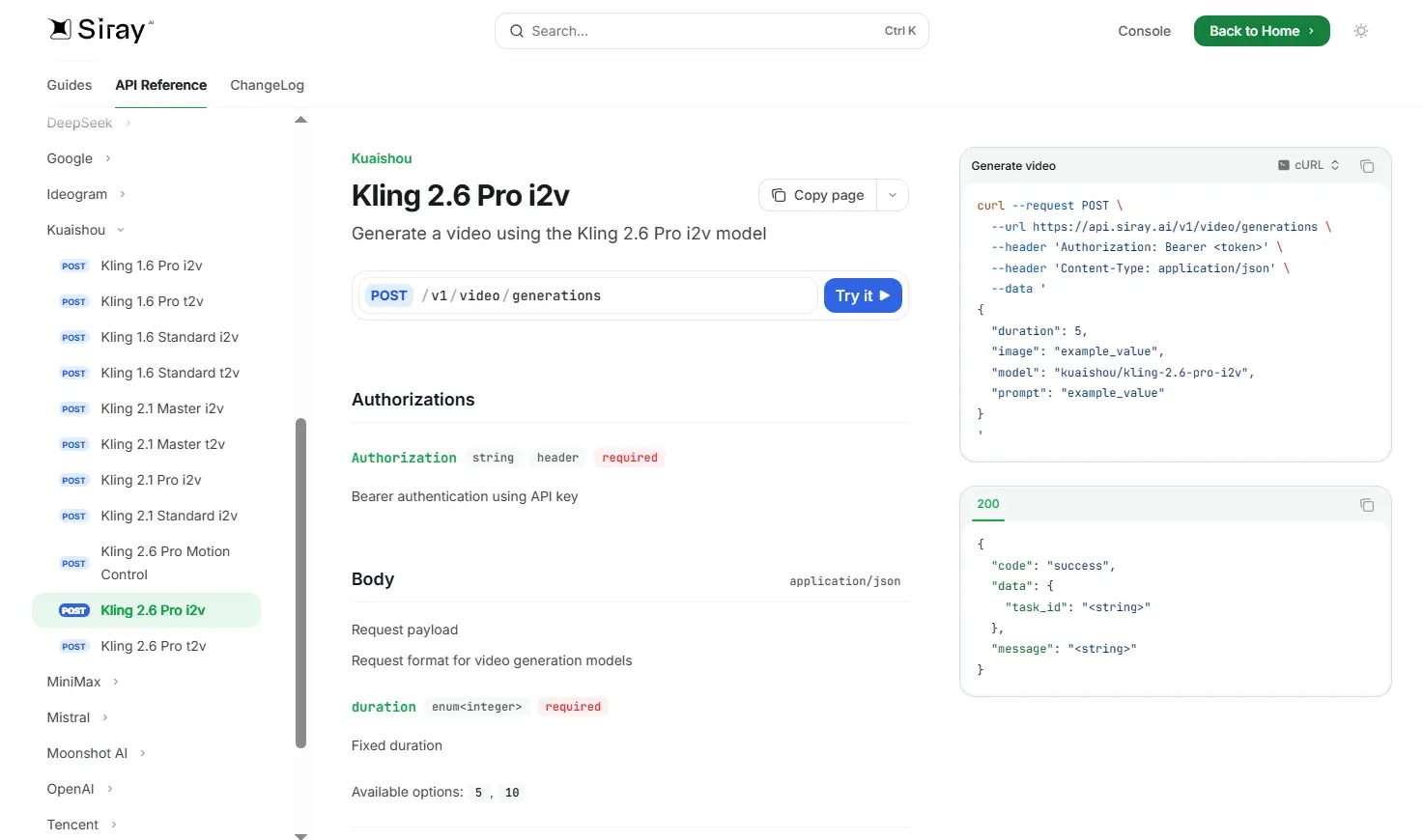
- Developer Friendly: If you are building an app, our standardized JSON response format makes swapping models easy. You can switch from Vidu to Kling 3.0 in your code just by changing a model ID string.
A Note on Prompting
To get the best out of Kling 3.0, precision is key. Based on the Kling AI Video 3 Model User Guide, we recommend a structure of: [Subject Description] + [Action/Movement] + [Environment/Lighting] + [Camera Movement]
For example:
"A cinematic shot of a cyberpunk detective, neon rain falling on his trench coat, he turns slowly to face the camera, bustling futuristic city background, shallow depth of field, slow zoom in."
The more descriptive you are about the light and the camera, the better Kling 3.0 performs.
Summary
Kling 3.0 and Omni represent a maturity moment for AI video. We are moving past the experimental phase and into the production phase. The physics are reliable, the resolution is broadcast-ready, and the multimodal understanding allows for complex creative workflows.
Whether you are an individual creator looking to make a short film, or a business automating thousands of video ads, these models provide the engine you need. And the best way to drive that engine is through an API that guarantees uptime and scalability.
We believe the future of content creation is automated, personalized, and high-fidelity. Kling 3.0 is a massive step toward that future.
You can get Free Kling 3.0 and Omni API Key right now on Siray.AI.