
LTX 2.3 NSFW Prompt Guide for Controlled Video Iteration

A usable LTX 2.3 prompt is a shot brief, not a pile of style adjectives. Define one shot, give each action an approximate time window, request continuity, generate a draft, inspect it, and regenerate with a tightened prompt when a beat is off. This draft-first loop is designed to make each regeneration count; it is not a benchmark claim about inference speed.
TL;DR: Organize one lawful-adult shot around scene, clearly adult subject, approximate action beats, camera, lighting and material direction, continuity requests, and a regeneration plan. Treat timestamps and preservation language as guidance rather than guarantees. Inspect a short draft, then regenerate with a tightened prompt when a beat is off. Lawful, consensual 18+ use only.
Safety boundary: Lawful, consensual 18+ adults only. CSAM, minors, age ambiguity, youthful framing, non-consensual acts, coercion, exploitation, incest, bestiality, and all illegal content are prohibited. Do not use a real person’s likeness or reference without documented adulthood, consent, and necessary rights.
Availability check (retrieved July 10, 2026): Siray’s exact LTX 2.3 22B T2V API reference and LTX 2.3 22B I2V API reference document text-to-video and image-to-video access, bearer API-key authentication, a prompt, fixed 6–20-second duration choices, 720p/1080p output choices, aspect-ratio choices, and an asynchronous task response. The official LTX 2.3 model card also confirms model-level T2V, I2V, and synchronized audio-video capability. The model is live on Siray, so a reader can generate T2V and I2V today; a brief authenticated smoke test before publishing is routine QA. For broader context, see Siray's overview of uncensored AI generation models.
Documented operations and remaining gates
| Operation or control | Status on Siray as of July 10, 2026 | What this guide may claim |
|---|---|---|
| Text-to-video | Live on Siray | Bearer-authenticated async task; prompt, 6–20-second choices, 720p/1080p, and aspect-ratio choices are available to use today. |
| Image-to-video | Live on Siray | The same core output controls and async task pattern are available, with an image input. |
| Synchronized audio | Not available on Siray | Model-level capability only; not exposed on Siray's hosted T2V/I2V endpoint. |
| Retake or interval repair | Not available on Siray | Not offered on Siray's endpoint; regenerate the shot instead. |
| Extend | Not available on Siray | Not offered on Siray's endpoint; regenerate the shot instead. |
| Exact prompt-beat timing | Unresolved | Treat timestamps in prose as approximate direction, not frame-accurate controls. |
| LTX-specific ComfyUI node | Unresolved | Generic hosted Siray model nodes do not prove an LTX-specific node. |
| Pre-publish smoke test | Routine QA step | Run one authenticated test before publishing, standard practice rather than a doubt about availability. |
LTX 2.3 Source:civitai
Why Should an LTX Prompt Describe One Shot, Not a Whole Story?
Use the editorial rule one shot, one visual beat, one intended endpoint. This is Siray guidance, not a documented Lightricks guarantee. A long narrative forces the model to reconcile multiple locations, poses, camera moves, wardrobe states, and lighting changes. That makes diagnosis difficult: when the result breaks, it is unclear which instruction caused the conflict.
Weak:
A 28-year-old adult performer enters a hotel, changes outfits, poses by a window, walks to bed, and the camera circles dramatically.
Stronger:
Eight-second private boudoir editorial: one continuous medium shot beside a rain-lit window. A 28-year-old adult performer turns from the window, loosens a burgundy silk robe, and ends facing the camera.
The rewrite states a clear opening, transition, and intended endpoint. It may make review and revision clearer, but it does not guarantee execution of every detail.
The Eight Layers of Siray’s Editorial LTX Shot-Contract Framework
The following is an original Siray editorial framework for organizing LTX prompts; it is not an official Lightricks prompt schema. Write positive direction first; constraints should name only recurring defects.
| Layer | What it controls and how to phrase it | Miniature example |
|---|---|---|
| 1. Scene and shot | Location, approximate duration, framing goal, one visual beat | Eight-second private boudoir editorial, one continuous medium shot beside a rain-lit window. Duration in prose is an intent unless a dedicated control exists. |
| 2. Adult subject | Explicit age, identity anchors, appearance, wardrobe, willing context | A 28-year-old adult performer with a short black bob, warm olive skin, and a burgundy silk robe. |
| 3. Action timeline | Ordered start, transition, and endpoint | About 0–2s: window gaze; 2–5s: loosens robe belt; 5–8s: turns back. Labels are approximate unless dedicated controls exist. |
| 4. Camera | Lens feel, shot size, movement, pace, focus | 50 mm portrait look, slow dolly-in, eye-level camera, face intended to remain sharp. |
| 5. Lighting and materials | Light direction, skin, hair, fabric, gravity, contact | Soft amber key light; silk folds respond to the hand at the waist. |
| 6. Audio | Room tone, intended synchronized sounds, dialogue or silence | Low rain ambience, quiet silk rustle near the turn, no music. Verify audio support in the deployed workflow. |
| 7. Continuity requests | Identity, anatomy, wardrobe, set, eyeline, audio | Request continuity of face, hairstyle, robe color, window position, hands, and rain ambience. These are requests, not locks. |
| 8. Retake or extend intent | The failed interval or next accepted beat | Select an interval through documented UI/API controls if available; use prompt text to describe the correction or continuation. |
[scene + one-shot goal] + [clearly adult subject anchors] + [approximate action beats] +
[camera and focus] + [lighting, skin, hair, fabric, and contact direction] +
[audio intent] + [continuity requests] + [retake or extend intent]
A short defect-specific block can be appended to the main prompt:
Avoid identity drift, extra fingers, fused hands, rubbery fabric, sudden exposure shifts,
background warping, unsynchronized cloth sounds, subtitles, logos, and text overlays.
This is editorial advice. Do not assume Siray exposes a separate negative_prompt parameter unless current LTX endpoint documentation lists one, and do not treat constraints as guaranteed exclusions.
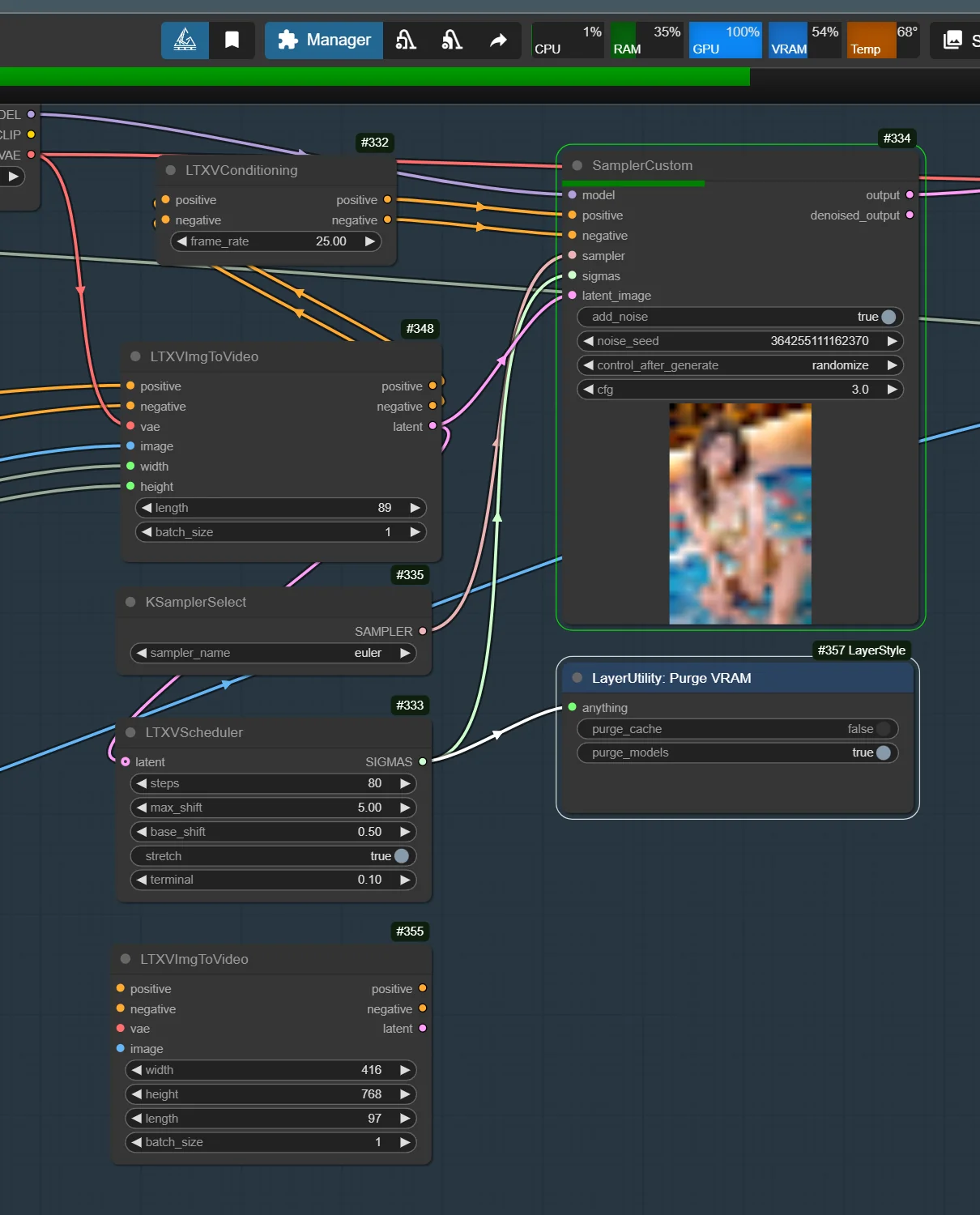
How Should Action, Camera, and Audio Share One Timeline?
Replace “moves seductively” with observable direction. Use approximate timeline labels to communicate setup, transition, and endpoint across action, camera, and sound. Treat them as prompt guidance rather than guaranteed frame-accurate timing unless the live Siray endpoint exposes dedicated timing controls.
0–2s: the 30-year-old adult performer stands still; locked medium shot; rain ambience only.
2–5s: the performer turns and loosens the robe belt; slow dolly-in begins; silk rustle follows the hand movement.
5–8s: the performer stops in a tasteful topless pose; camera settles; cloth sound ends while rain continues.
This editorial method is organized around shot review and editability. The model card and live Siray documentation, not another model's workflow, should determine supported LTX controls. Teams weighing open-source alternatives can compare an open-source Wan 2.x NSFW video preview for contrast.
Causal Lighting and Material Directions Clarify the Intended Result
Write cause before effect. “Amber light from camera left creates a soft cheek highlight” communicates more direction than “cinematic lighting.” This is prompt-writing guidance, not a measured guarantee of realism. Connect movement to materials: “the hand pulls the belt, silk tension increases, then the folds release.” Give hair a force, body weight a support point, and hand contact visible pressure.
Fine natural skin texture; stable exposure as the subject turns.Short hair shifts slightly from the turn, then settles.Weight transfers to the rear foot; shoulders remain naturally balanced.Fingers press lightly into the silk without clipping; folds compress beneath the hand.
Do not request hard noon sunlight and soft amber window light from the same direction, or weightless fabric and heavy silk at once. Contradictory physical directions can make the intended result harder for the model to resolve and may contribute to inconsistent motion or materials; they are not proven to be the sole cause of a failed frame.
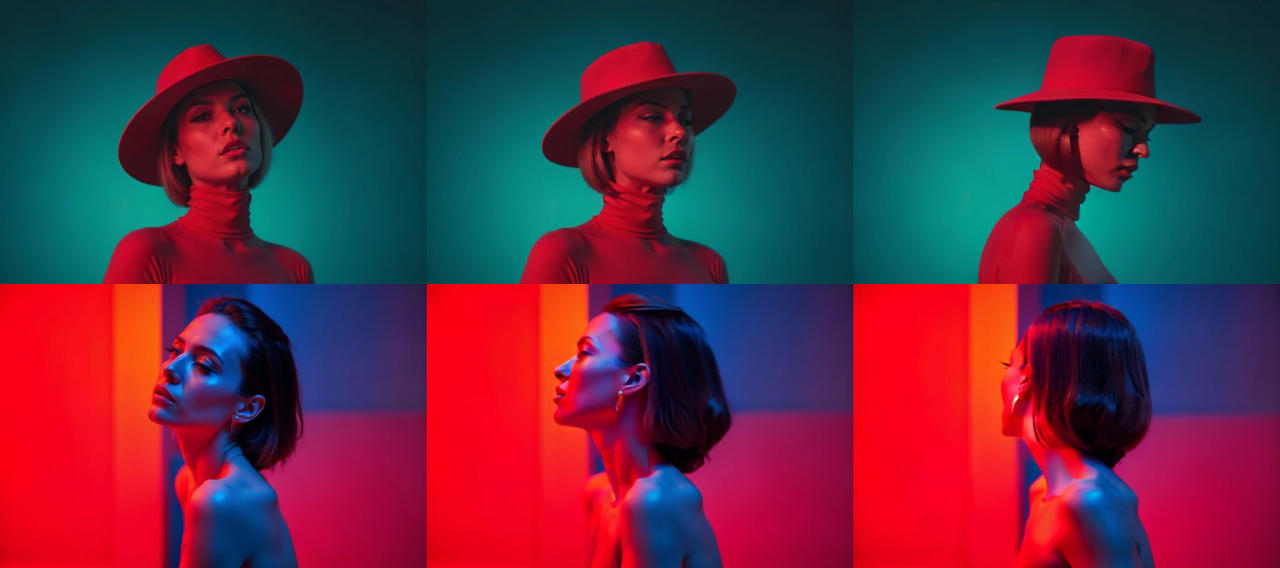
When Should Creators Regenerate, Retake, or Extend?
Use a simple decision rule:
- Regenerate when the premise, framing, or identity is wrong from the opening frame.
- Retake when a bounded interval contains a hand, motion, fabric, expression, or audio defect.
- Extend only when the accepted endpoint is stable enough to become the next clip’s starting state.
Use a controlled loop: draft → inspect → targeted retake → extend. For retake, select the interval in the current Siray UI/API parameters if interval selection is available, then describe only the correction and request preservation of accepted incoming/outgoing states. For an extension, repeat accepted identity and scene anchors and describe only the next beat.
What Does a Complete Lawful-Adult LTX 2.3 Prompt Look Like?
This example demonstrates the eight editorial layers.
Eight-second private boudoir editorial, one continuous shot in a modern bedroom beside a
rain-lit window. A clearly adult 28-year-old performer with a short black bob, warm olive
skin, and a burgundy silk robe stands alone and poses willingly for the camera.

0.0–2.0s: medium shot; the performer faces the window, breathing calmly, with both hands
visible at waist level. 2.0–5.0s: the performer slowly loosens the robe belt and lets the robe
open to a tasteful topless pose while turning toward camera. 5.0–8.0s: the performer settles
into the final pose, keeps natural posture, and holds direct eye contact.

Eye-level 50 mm portrait look, slow controlled dolly-in, no cuts, no sudden zoom, face and
hands remain sharp. Soft amber key light from camera left, cool rain reflections from the
window, realistic skin texture, subtle hair movement, natural body weight, believable silk
folds, tension, gravity, and contact against the body.

Audio intent: low rain ambience throughout, quiet room tone, soft silk rustle near the turn,
no dialogue, no music. Request continuity of facial identity, adult body proportions, hairstyle,
skin tone, robe color, window geometry, eyeline, exposure, and audio bed across the clip.
Avoid anatomy errors, extra fingers, fused hands, identity drift, rubbery cloth, background
warping, abrupt lighting changes, subtitles, logos, and text overlays. Consenting adult 18+
subject only; no minors, no age ambiguity, no coercion, and no exploitative context.
Retake variant
In documented Siray retake controls, select 2.0–5.0s only if interval selection is available.
Use the prompt to correct the left hand and make the robe opening slower while requesting
preservation of identity, camera direction, lighting, window geometry, and accepted endpoint.
Extend variant
Select a documented extension duration if available. Request continuity of identity, pose,
lens feel, lighting, rain ambience, robe state, and room geometry; exact preservation is not
guaranteed. The performer turns the gaze back toward the window while the camera continues
the same slow dolly-in; request no new objects or cuts.
Use a real-person reference only when documented evidence shows every depicted person was at least 18 at capture, consented to the intended use, and is covered by necessary rights or licenses. For synthetic references, use an unambiguously adult, rights-cleared subject and avoid resemblance to a real person without permission.
How Can Creators Run the Documented Siray Workflow?
Use only the controls in the exact T2V or I2V reference for the initial generation. This workflow separates a live submission from the unresolved edit operations discussed elsewhere:
- Create a Siray account and obtain an API key.
- Choose the LTX 2.3 T2V or I2V endpoint; provide the required image input for I2V.
- Send the API key as bearer authentication and submit the required
prompt, duration, resolution, and aspect-ratio values. - Store the returned task identifier and follow the asynchronous task flow rather than expecting video bytes in the submission response.
- Inspect the finished draft against identity, action order, camera, materials, and continuity intent.
- Regenerate the shot through the documented T2V/I2V controls when a draft misses. Siray's LTX endpoint has no interval retake, extend, or synchronized audio, and no LTX-specific ComfyUI node — treat prompt timestamps as approximate direction, not frame-accurate controls.
⚠️ Publication recheck (routine QA): T2V/I2V are live on Siray and ready to use. As a standard pre-publish step, reconfirm the exact references and run one authenticated smoke test. Keep audio, retake, extend, exact timing, and LTX-specific ComfyUI claims unresolved unless new exact documentation and testing establish them.
FAQ
Can LTX 2.3 generate lawful NSFW video on Siray?
Yes. Siray’s exact references document LTX 2.3 T2V and I2V endpoints, and the model is live on Siray today. Availability does not mean permission for every prompt: actual acceptance remains subject to law, consent, rights, Siray policy, and endpoint behavior. This guide covers only lawful, consensual adult 18+ creation.
How long should an LTX 2.3 prompt be?
Use enough detail to communicate the eight editorial layers, but remove repeated adjectives and extra story beats. Approximate timing, identity anchors, camera direction, materials, audio intent, and continuity requests make the draft easier to inspect.
Should an LTX 2.3 prompt include defect constraints?
A short defect-specific constraint block can be appended to the main prompt after positive direction. Do not assume Siray exposes a separate negative_prompt parameter unless it appears in live endpoint documentation, and do not treat a constraint as guaranteed suppression.
When is retake better than full regeneration?
Request retake when the deployed workflow supports it and one bounded interval fails while surrounding states are acceptable. Select the interval through documented controls if available; do not assume prose alone chooses exact start and end times. Regenerate when identity, framing, or the premise is already wrong at the start.
How can an extended clip keep the same character?
Extend only from an accepted endpoint. Request continuity of facial identity, body proportions, lens feel, camera direction, lighting, set geometry, wardrobe state, motion direction, and audio bed. Inspect the extension before accepting it.
Define, Inspect, Then Use Only Verified Operations
- Define one shot with all eight contract layers.
- Submit a short T2V or I2V draft through the asynchronous flow and inspect it.
- Use retake, extend, or Siray audio only after exact documentation and production testing confirm the operation.
Create a Siray account to obtain one API key and start with the live LTX 2.3 T2V/I2V workflow today. Run a routine authenticated smoke test before you publish.