Qwen Image 3.0 Explained: What Alibaba Just Launched

Key Takeaways
- Alibaba released Qwen Image 3.0 on August 5, 2026 — its third-generation image model, built around "useful" output like infographics, documents, and instruction-based editing rather than pure aesthetics.
- The launch shipped with no benchmark scores, no model card, and no disclosed architecture — a reversal from Qwen-Image 1.0 and 2.0, which both published technical reports and benchmark numbers.
- Early hands-on testing shows real strengths (dense text rendering, reference-based editing) alongside real gaps (landmark and historical-figure accuracy) — none of it independently confirmed at scale yet, and access is invite-only with no public API.
A Launch With No Benchmarks
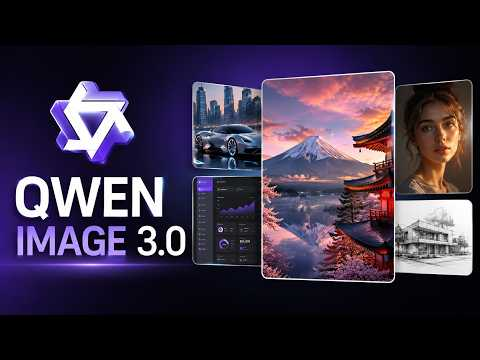
Alibaba's Qwen team shipped Qwen Image 3.0 on August 5, 2026, under the tagline "Rich Content, Authentic Details, Deep Knowledge." The stated goal isn't better-looking images — it's images that work as a deployable tool: dense newspaper pages, multi-panel infographics, academic papers with legible math notation, all rendered in a single pass.
What stands out is what didn't ship with it. No benchmark scores from Alibaba itself. No model card. No technical report. That's a sharp break from the two prior generations — Qwen-Image 1.0 launched in August 2025 with open weights under Apache 2.0 and a same-day technical report, and Qwen-Image 2.0 followed with its own report focused on training and inference efficiency. Qwen Image 3.0 arrived without any of that self-published data — the one public performance signal it does have, a third-party arena ranking, comes later in this piece.
What the Model Actually Does
Per Alibaba's own launch materials, Qwen Image 3.0 handles:
- Ultra-long prompts — up to 4,500 tokens, roughly 4.5x the ~1,000-token input length Qwen-Image 2.0 could take, enough to describe information-dense layouts in one instruction.
- Dense, practical layouts — the launch demos show full newspaper pages, multi-panel infographics, and academic papers with formulas, not single-subject illustrations.
- Small text rendering — legible text down to about 10 pixels, across 12 languages and 20+ fonts in a single pass.
- World-knowledge integration — demos include generating weather maps for named cities and dates, and replicating web pages and live-stream interfaces (see the accuracy caveat below for how well this holds up outside curated demos).
- Instruction-based editing — a separate Edit variant, documented on Alibaba Cloud's Bailian platform, supports both text-to-image and image-to-image modes and takes up to three reference images alongside an edit instruction. It changes one element — an object, a style, an addition or removal — without regenerating the whole scene. That's the same up-to-three-reference-image pattern GPT Image 2 and Nano Banana Pro use for edits, not a new interaction model, but it's officially documented rather than inferred from demos.
Two numbers on the edit path are worth flagging by source, since they carry different weight. Alibaba's own Bailian listing states edit turnaround at roughly 40% faster than a full generation call — an official claim. Third-party review site 无矩AI (Wuju AI) put a price on that gap: roughly ¥0.12 per edit versus roughly ¥0.50 per full-generation image — useful context, but a third-party estimate, not an Alibaba-published price.
How 3.0 Stacks Up
Alibaba hasn't disclosed 3.0's parameter count, architecture, or training data — that's confirmed absent, not just unreported yet. For context, the prior generation (2.0) documented an 8-billion-parameter Qwen3-VL encoder paired with a 7-billion-parameter diffusion decoder generating natively at 2048×2048, backed by a published DPG-Bench score of 88.32 (ahead of FLUX.1's 12B-parameter 83.84) and a #1 ranking on the AI Arena leaderboard for both text-to-image and editing. Don't read 2.0's architecture onto 3.0 — they're a different model, and 3.0's own architecture is still undisclosed.
Where 3.0 does have a public number: Qwen-Image-3.0-Pro entered the Text-to-Image Arena leaderboard at #5 with a score of 1,263 — a sharp jump from Qwen-Image-2.0-Pro's #15 (1,191), and one that lands it between GPT Image 2 and Nano Banana 2 on the same board. That's a real, sourced ranking, not a demo claim.
What limited third-party hands-on testing exists for 3.0 — published in the days after launch, not independently replicated at scale — points in both directions. In one side-by-side test using an identical complex, multi-element prompt, 无矩AI measured roughly 85% element retention for Qwen Image 3.0 versus roughly 50% for Qwen-Image 2.0 — a meaningful jump in prompt adherence, if the single test holds up under wider use. Chinese-language text rendering scored 9.0/10 in the same review, the highest mark among the dimensions tested; in a mixed Chinese-English layout, the Chinese title rendered cleanly while the English subtitle had a one-character discrepancy.
The same testing is candid about where 3.0 falls short. Reviewers rated it behind GPT Image 2 for anything requiring genuine world knowledge — landmark accuracy and historical figures came back with noticeably more errors — and behind Midjourney for open-ended creative illustration, describing 3.0's output there as safe rather than distinctive. For precise infographics and data charts specifically, GPT Image 2 was rated more reliable; 无矩AI's take was that Qwen Image 3.0 is better suited to illustrative diagrams than to charts where the numbers need to be exact. Every one of these performance figures — Alibaba's and the third-party reviewers' alike — is self-reported or single-source, not independently reproduced at scale. Treat the "world-knowledge" framing above as demo-stage, not a general-knowledge guarantee.
The Catch: Invite-Only, No Weights
For now, Qwen Image 3.0 is reachable only through invite-only API access, with no published rollout timeline — Alibaba has indicated the model will reach first-party surfaces like Qwen Chat before general developer access opens. If your workflow needs this kind of output today — dense text-in-image generation, instruction-based editing, multilingual rendering — Qwen Image 3.0 itself isn't an option yet.
What to Use Right Now
Several already-live, API-accessible models cover overlapping ground — strong prompt adherence, text rendering, multilingual output, reference-based editing — without an invite queue: GPT Image 2, Nano Banana Pro, Seedream 4.5, and Z-Image Turbo all ship today with public pricing and documented specs. None matches Qwen Image 3.0's specific 4,500-token, single-pass infographic pitch exactly, but for text-heavy or high-adherence image generation, they're usable now instead of on a waitlist.
Siray provides API access to all of them through one key and one request format, so switching models once Qwen Image 3.0 opens up is a one-line change, not a new integration.
FAQ
Does Qwen Image 3.0 support image editing, not just generation?
Yes — Alibaba's Bailian platform lists a separate Edit variant that takes up to three reference images plus an instruction for targeted changes. Like the rest of 3.0, it ships without a published benchmark or open weights.
What should I use today if I need similar capabilities?
For dense text rendering, instruction-based editing, and high prompt adherence, GPT Image 2, Nano Banana Pro, Seedream 4.5, and Z-Image Turbo are live now and cover overlapping use cases — see the comparison guide linked above.
Worth Watching, Not Yet Usable
Qwen Image 3.0 is a real step forward on paper — 4,500-token prompts, single-pass infographic rendering, and reference-based editing are genuinely hard problems, and early testing backs up at least some of it. But "invite-only, no benchmarks" means it's not something you can build on this week. If the job needs to ship now, the models already available cover the same ground.
Create your free Siray account and start generating with the image models available today — no invite queue required.