Qwen Image 3: Batch 6 Social Ad Variants From One Prompt

Testing social ad creative rarely works with a single image. Most teams need three, four, or six visual takes on the same concept to see what actually performs — different framing, different color treatment, different mood, same core idea. Qwen Image 3, available on Siray as alibaba/qwen-image-3-t2i, generates up to 6 of those variants from one prompt in a single API call.
Key Takeaways
- The n parameter (default 1, range 1-6) generates that many independent image variants from one prompt in one call — no separate requests needed.
- Each unit of n is billed as a full image at $0.030 — a batch of 6 costs $0.18 total, not a discounted batch rate.
- size and aspect_ratio are both required fields on this endpoint, with no default values — leaving either out will error.
What the n Parameter Actually Does
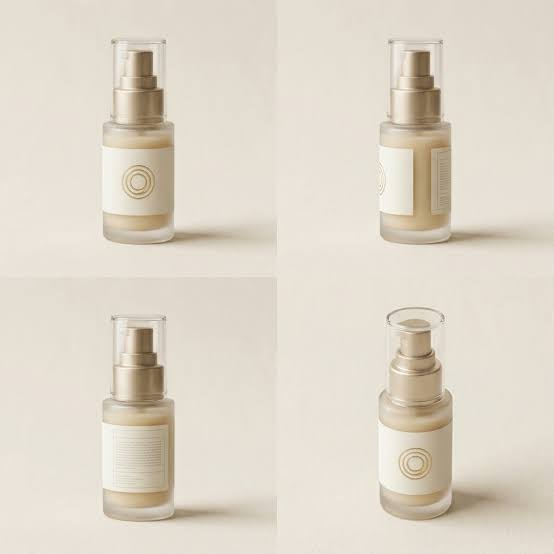
The n parameter controls how many independent images come back from a single request — an integer from 1 to 6, defaulting to 1. Send the same prompt with n: 6 and the API returns six distinct generations in one round trip, rather than requiring six separate calls with six separate round-trip delays. Each of the six outputs is generated independently, so the same prompt naturally produces some visual variation across the set — useful for ad testing, where you want options rather than six copies of the same image.
Structuring a Prompt for Batch Variants
Write the prompt the way you would for a single image — describe the subject, setting, and mood you want — and let n handle producing multiple takes on it rather than trying to script variation into the prompt text itself. Two fields are mandatory on this endpoint regardless of batch size: size (only 1k or 2k, no 4k tier) and aspect_ratio (15 supported ratios, from 1:1 and 16:9 to less common options like 9:21). Neither has a default value, so a request missing either one will fail rather than silently falling back to a preset.
Which of the 15 to pick depends on where the ad is actually going to run, not on any default the endpoint would fall back to. Square (1:1) covers standard feed placements across most platforms. Widescreen ratios like 16:9 suit YouTube pre-roll and desktop banner slots. Taller ratios — 9:21 sits at the extreme end of that range — are built for full-screen vertical formats like Stories and Reels, where a square or landscape crop would just get cut off by the platform's own UI. Since there's no default, it's worth deciding the placement first and setting aspect_ratio to match, rather than defaulting to 1:1 out of habit and cropping down after the fact.
One Call vs Six Separate Requests
The alternative to n: 6 is sending six separate requests with n: 1 each, and the practical difference isn't just convenience. Six separate calls mean six separate round trips, each carrying its own network latency, so total wall-clock time for the batch stacks up rather than overlapping. A single n: 6 request also keeps the batch as one logical unit for tracking purposes — one request ID, one response payload, one point of failure to handle — rather than needing to reconcile six independent responses that could fail or time out in different ways. For anything running inside a script or automated pipeline rather than triggered by hand, that operational simplicity matters at least as much as the cost math below.
The Cost Math
Qwen Image 3's base tier runs $0.030 per output image, confirmed as a flat per-image rate independent of size or aspect_ratio — there's no discount badge on this pricing, and it holds whether you're generating one image or six. That means n scales cost linearly: a batch of 6 runs $0.030 × 6 = $0.18 total for the call, not a flat per-call fee. Budgeting for a week of daily 6-variant test batches means multiplying that $0.18 by however many prompts you run, not treating batch size as free.
As a concrete example, a team running one 6-variant batch per weekday on a single ad concept spends $0.18 × 5 = $0.90 a week for that concept alone. Testing three separate concepts in parallel over the same week puts the total at $2.70 — a small number in absolute terms, but one worth writing into a budget explicitly rather than assuming batch generation is effectively free just because a single call is cheap.
What This Isn't For
Two boundaries worth naming. This is the text-to-image endpoint (-t2i) — modifying an existing image, like adjusting a product photo already in hand, is a separate endpoint (-edit) with a different workflow; see Qwen Image 3 Edit: Batch Consistency Across a Product Line if that's the actual job. And there's no negative_prompt field on any of the six Qwen Image 3 endpoints, batch or otherwise — if your workflow depends on excluding specific elements via a negative prompt, this model family doesn't support that path; variation has to come from prompt wording and the natural spread across n outputs, not exclusion lists.
Ready to generate your first batch of ad variants? Create your free Siray account and try Qwen Image 3 alongside 300+ other models on one API.