
Wan 3.0 Short Drama Types: Live-Action, Comic, Anime

"Short drama" isn't one production path — it's three, depending on what you're starting from. A live-action creator with photographed actors, a comic adaptation with panel art, and a fully animated series all feed different source material into the same underlying video models, and picking the wrong path wastes generations before you even see a usable cut.
Key Takeaways
- Live-action cuts start from real footage or actor photos — ref2v locks the actor's face and identity across every scene.
- Comic/manga cuts start from panel images driven with i2v — this is image input, never a document or text-file upload.
- Animated cuts start from nothing but a style-locked prompt — t2v alone covers a full scene beat, up to 30 seconds.
- Same underlying mechanics across all three (i2v/ref2v/t2v) — the difference is what you feed in, not a different capability tier.
Live-Action: Identity Lock Across Cuts
If your source material is real footage or photographed actors, the job is keeping the same face consistent across every cut in the episode. That's a ref2v job: feed the actor's reference photo in, and every subsequent scene call reuses that identity instead of re-describing the actor's face in every prompt.
images: [actor_reference.jpg]
prompt: "Use the person from the reference image as the main subject. The person is facing the painting, with their back toward the camera, while holding a plate filled with food. Keep the person’s appearance, clothing, and overall visual style consistent with the reference image.

Create a continuous **10-second shot** with natural, subtle movement. The person remains facing the painting throughout the entire shot and gently holds the full plate with both hands. Keep the camera stable and cinematic, with smooth motion and no cuts. Preserve the composition, lighting, and atmosphere of the reference image.
"
model: alibaba/wan-3.0-ref2v
Prompt

Comic/Manga: Panel-Driven i2v
Adapting a comic or manga means the source material is panel art, not photography. The technique is the same shape as live-action, but the input is a single panel image, and the driver is i2v rather than ref2v.
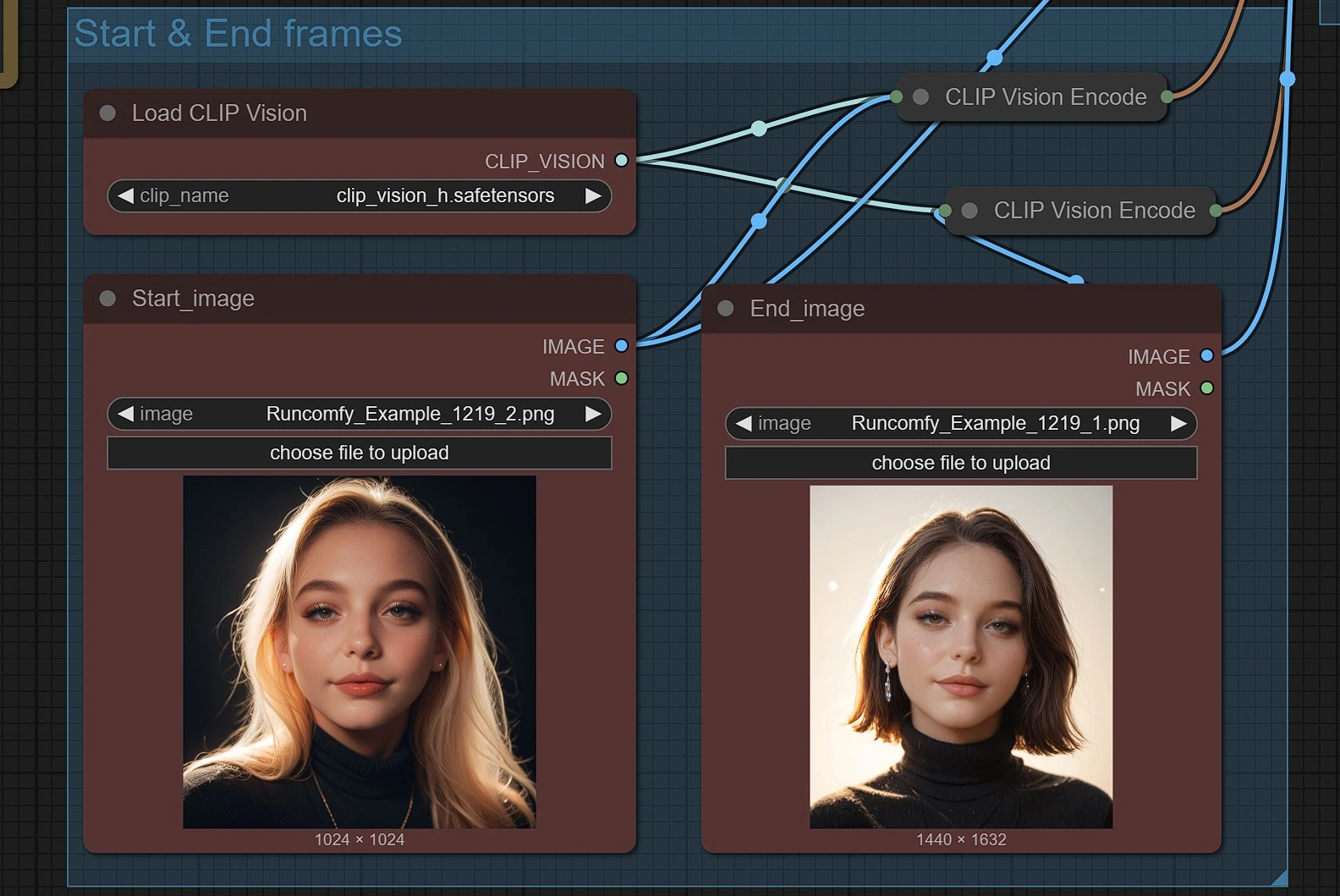
This is worth stating precisely: you're uploading a panel image and animating it with image-to-video. There's no document or text-file input field on any Wan 3.0 endpoint — alibaba/wan-3.0-i2v takes an image field (required, one image) plus an optional end_image for the closing frame, alongside duration, size, aspect_ratio, audio_enable, and prompt_expansion_enable. If your workflow starts from a script or a document instead of an actual image of the panel, that's a step you have to do yourself first — render or screenshot the panel, then feed the image in.
image: panel_03.png
end_image: panel_03_final_pose.png
prompt: "camera slowly pushes in on the character, subtle hair andfabric movement, maintaining the manga art style"
model: alibaba/wan-3.0-i2v
prompt
Animated: One t2v Call Per Scene Beat
For fully animated/stylized short drama with no photographic reference at all, t2v covers it — a style-locked prompt describing the look, with no image input needed. Because Wan 3.0's duration runs up to 30 seconds, one call can carry a full scene beat rather than needing to be stitched from several short clips.
prompt: "anime-style short drama scene, two characters in aclassroom at sunset, warm rim lighting, hand-drawn line artaesthetic, consistent character designs throughout"duration: 20model: alibaba/wan-3.0-t2vComparison at a Glance
Subtype | Input | Endpoint | Typical duration |
Live-action | Actor reference photo(s) | ref2v | 4-15s per cut |
Comic/manga | Single panel image | i2v | 4-10s per panel |
Animated | Style prompt only | t2v | up to 30s per beat |
All three run through the same non-Spicy endpoints — bytedance/seedance-2.5-ref2v / alibaba/wan-3.0-ref2v for live-action, alibaba/wan-3.0-i2v for comic, alibaba/wan-3.0-t2v for animated — so switching between subtypes mid-project is just a different model string and input shape, not a different account or integration.
For a broader look at building a full short-film pipeline across cuts, see our Seedance and Wan 3.0 short-film guide. If cost per episode is the deciding factor between endpoints, our micro-drama cost comparison breaks that down directly.
Create your free Siray account and match your source material to the right endpoint before your next episode.