
Renovation Before and After Videos From Just Two Photos

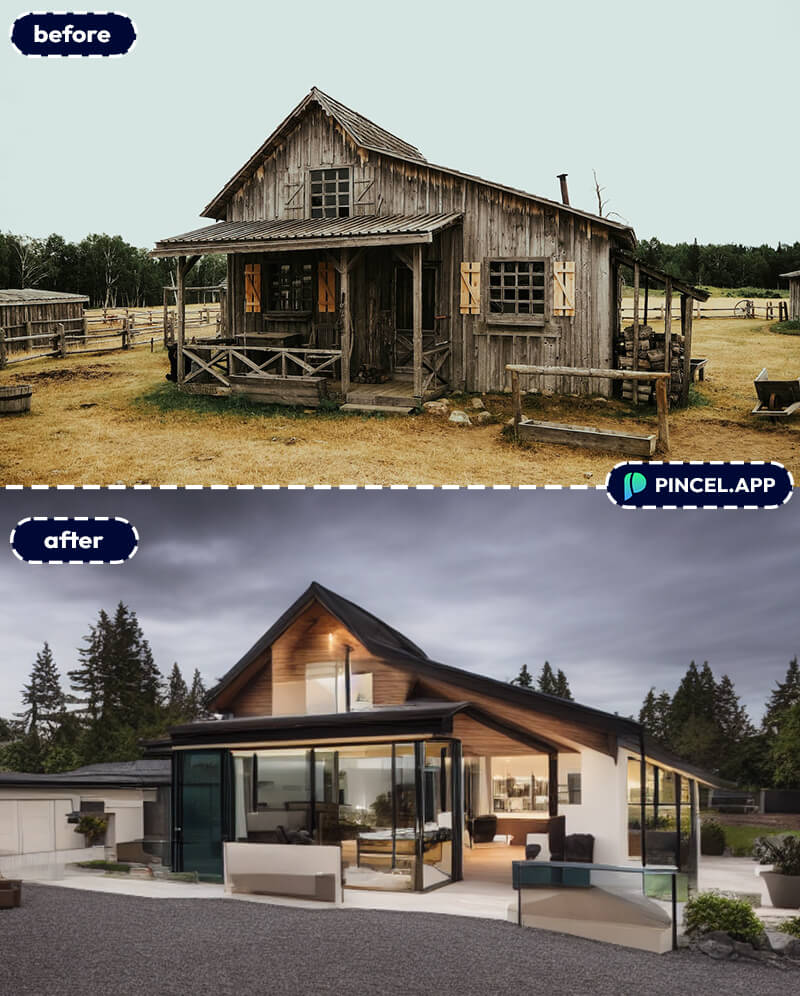
A contractor finishing a kitchen has two photographs and nothing else. There is no footage of the work, and nobody was filming when the cabinets went in. Siray's start-end-to-video endpoints are built for exactly that shape of input: they take the first frame and the last frame and generate the span between them.
Key Takeaways
- vidu/vidu-q2-pro-se2v and bytedance/seedance-1.5-pro-se2v both declare images as an array with minItems: 2 and maxItems: 2. Two is not a minimum. It is the requirement.
- Vidu reaches 1080p and offers audio_enable, but its duration enum is [4, 8].
- Seedance 1.5 Pro reaches 12 seconds and exposes seven aspect_ratio values, but its size enum stops at 720p and it has no audio field.
- Neither endpoint gives you 1080p at 12 seconds. Pick which one you would rather give up.
- Neither endpoint exposes a seed field — no reproducibility on either se2v endpoint, unlike Vidu's own t2v/i2v endpoints.
Two Photos Is Not a Minimum
Most image-conditioned video endpoints take one image and invent everything after it. The se2v endpoints are different. The schema pins the array at exactly two entries, so the request either carries both frames or it fails validation. The first entry is where the clip starts and the second is where it lands.
That constraint is the reason this scenario works. A renovation pair is already two fixed states of one room, shot from roughly the same position. You are not asking the model to imagine the finished kitchen. You are asking it to move between two kitchens you have already photographed.
What Each Endpoint Gives Up
vidu-q2-pro-se2v | seedance-1.5-pro-se2v | |
images | exactly 2 | exactly 2 |
duration | [4, 8] | [4, 8, 12] |
size | 720p, 1080p | 480p, 720p |
aspect_ratio | not present | 7 values incl. adaptive, 9:16, 21:9 |
audio_enable | present | not present |
The trade runs in opposite directions. A listing video that has to look sharp on a property page wants Vidu's 1080p, and eight seconds is usually enough for a single room. A social cut that needs to breathe, or needs to be reframed to 9:16 without cropping in post, wants Seedance's longer ceiling and its aspect ratio control.
Neither Endpoint Offers Seed
Reproducibility isn't on the table here. Both vidu-q2-pro-se2v and seedance-1.5-pro-se2v omit seed from their schema entirely — no field to lock, even for a shoot that needs a repeatable pass. That gap is shared by both vendors, not a Vidu-versus-Seedance trade like the rows above, and it means the generation-wide seed field from the Vidu Q2 vs Q3 Pro guide, present on Vidu's own t2v and i2v, stops short of se2v.
One more asymmetry: Seedance's aspect_ratio is required, not optional — every request must pick one of seven values. Vidu's schema has no aspect_ratio key at all.
Shoot the Pair So the Model Has Something to Work With
The pair does the work, so the pair is worth planning. Stand in the same corner for both shots and match the focal length. Keep one fixed object in frame that does not change, such as a window or a doorway, because that anchor is what makes the transition read as one room rather than two. Shoot at the same time of day if you can, since a daylight-to-lamplight jump reads as a lighting change rather than a renovation.
The Prompt Describes the Change
With both endpoints the prompt is still required, and it should describe the transition rather than re-describe either photo. The model can already see both ends. What it cannot infer is whether you want a slow reveal, a wipe, or a camera push through the room while the cabinets appear.
What the Schema Does Not Promise
Neither spec exposes a field for transition style, and neither documents how the intermediate frames are constructed. A field list tells you what you can send, not how good the result will be, so budget a short test at the cheapest resolution before committing a client deliverable. Pricing for both endpoints is on the model detail page in the console, and should be read there rather than estimated from a per-second rate.
The same two-frame idea shows up in a different form on the adult video endpoints, where the end frame is optional rather than mandatory. For single-image workflows and general scene planning, see the Wan 3.0 short-form video scene guide and the small-business product video ads walkthrough. Menu and dish videos have their own field constraints, covered in the Pixverse V6 multi-clip piece.
Both se2v endpoints are live now. Compare them on your own before-and-after pair at console.siray.ai/model-api.